Plain City homeowners face unique roofing challenges from rural wind exposure on open farmland to complex permit jurisdictions spanning Madison and Union counties. Winter Storm Fern dumped record snow in January, and two March windstorms compounded the damage across 43064. Here is what every Plain City homeowner needs to know in 2026.
With a population of about 5,000 that is growing rapidly, Plain City blends its historical Amish settlement roots with booming new development in communities like Jerome Village. That growth means the housing stock ranges from century-old farmhouses in the historic village core to brand-new Craftsman-style homes, and 2026's storms have tested all of them. As a rural community, Plain City faces roofing challenges that suburban homeowners simply do not encounter.
Plain City Neighborhoods and Their Roofing Challenges
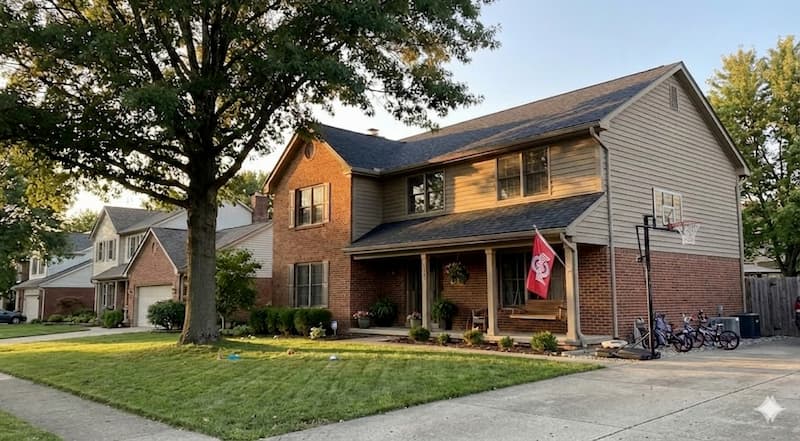
Historic Village of Plain City
In the village core, older homes from the late 1800s through mid-1900s often have decades of deferred maintenance. Hidden damage may have been developing for years: leaks that started small and spread through the roof deck, aged flashing that is failing around chimneys and vents, and ventilation that does not meet modern codes. If your historic Plain City home has not had a thorough roof inspection recently, problems may be developing right now. These older structures also benefit from metal roofing options, which offer 40-50 year lifespans and superior wind resistance for exposed rural properties.
Jerome Village
Jerome Village is Plain City's premier new development, featuring Craftsman-influenced and modern farmhouse designs with complex roof lines, multiple gables, and strict HOA requirements. The HOA specifies approved shingle styles, colors, and materials. Using the wrong product, or even the right product installed incorrectly, can result in violation notices and forced re-work at your expense. DiYanni Roofing reviews Jerome Village's architectural guidelines before we begin any project.
Glacier Park, Meadows at Plain City, and Pioneer Crossing
These newer developments represent Plain City's growth surge. Homes built in the 2000s through 2010s are now approaching the 15-20 year mark where builder-grade shingles begin to fail. Many homeowners do not realize their warranty has conditions until they try to file a claim after storm damage. Regular inspections can catch deterioration early, before a leak turns into an interior repair bill.
Rural Properties and Farmhouses
Properties outside the village proper sit on open farmland with nothing to break the wind before it reaches your roof. This increased storm exposure makes proper installation techniques and quality materials critical. Traditional farmhouses may also have original ventilation systems that do not meet current codes. Metal roofing is an excellent option for these properties, providing superior durability and wind resistance that outperforms standard asphalt shingles in exposed rural settings.
2026 Storm Damage in Plain City
Plain City homeowners have been hit hard in 2026. Here is what happened:
- January 25-26, Winter Storm Fern: An 11.9-inch record snowfall across the Columbus region, with Level 3 snow emergencies declared in 13 counties. Plain City's rural properties were especially vulnerable. That heavy snow load created prime conditions for ice dams, where heat from your attic melts the bottom layer of snow, and meltwater refreezes at the eaves, backing up under shingles and into your home.
- March 13: A powerful windstorm with 71 mph gusts swept through Central Ohio. AEP reported 258,000 outages, the worst since 2012. Plain City's open farmland provides no natural windbreak, meaning properties here took the full force of these gusts. Wind at that speed lifts shingles from the decking and breaks the adhesive seal strip.
- March 23: Another 70 mph wind event with 1.4-inch hail confirmed across multiple counties. Back-to-back events like this cause compounding damage, with each storm worsening vulnerabilities created by the previous one.
If your Plain City home has not been inspected since these storms, you may be sitting on hidden damage. Schedule a free inspection or call (614) 304-1197.
Plain City Roofing Permits
Plain City has a unique permit jurisdiction that confuses many contractors. The Village of Plain City handles zoning permits, but building permits go through the West Jefferson Building Department at (614) 379-5246. Properties may also fall under Madison County or Union County depending on location. The wrong paperwork can delay your project and create code compliance issues. Plain City may not require a permit for a straightforward re-roof (repair or replacement of existing materials), but DiYanni Roofing verifies which authorities apply to your address and handles all necessary applications.
Plain City Roofing Costs
A typical Plain City roof replacement costs between $7,500 and $15,000, depending on your home's size, roof pitch, and materials. Traditional farmhouses with simpler roof lines tend to be more straightforward, while Jerome Village homes with complex gables and premium HOA requirements will be at the higher end. Here is a general range:
- Budget-friendly (3-tab shingles): $7,500 to $10,000
- Mid-range (architectural shingles): $10,000 to $13,500
- Premium (designer shingles or metal roofing): $13,500 to $20,000+
Plain City Homeowners: Save Up to $1,000
DiYanni Roofing is currently offering up to $1,000 off roof replacement for Plain City homeowners. Get an accurate estimate in about 60 seconds with our satellite tool, no salesperson visit required.
Get started: Instant Satellite Estimate | Call (614) 304-1197
Why Plain City Homeowners Choose DiYanni
Many roofing companies skip smaller communities like Plain City because they are farther from the Columbus core. DiYanni Roofing does not. As a fourth-generation family business serving Central Ohio since 1979, we treat every community with the same commitment. We have 5-star Google reviews, deep knowledge of Plain City's neighborhoods from the historic village to Jerome Village, and experience with the rural roofing challenges that suburban contractors do not understand. We handle the complex permit process so you do not have to.
Call (614) 304-1197, fill out our contact form, or try our instant satellite estimate to get started.