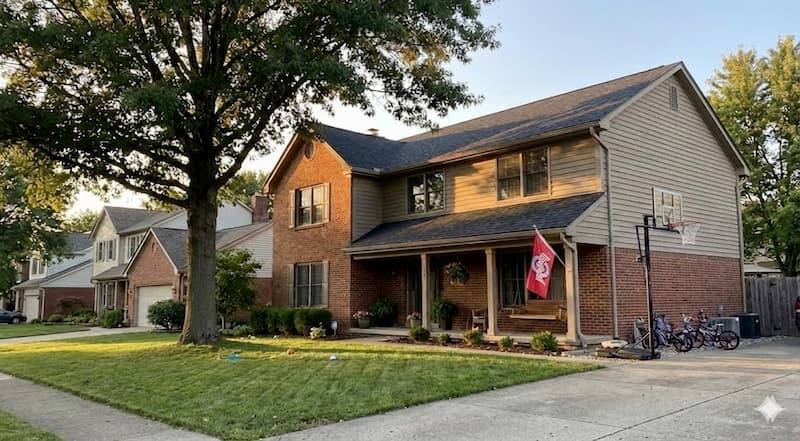
Clintonville and Beechwold homes built between the 1920s and 1960s have unique roofing challenges that newer-home contractors miss. From original skip sheathing and steep craftsman pitches to the mature tree canopy that accelerates shingle wear, here is what every Clintonville homeowner needs to know before replacing their roof.
Clintonville and Beechwold are some of Columbus's most established neighborhoods. Stretching from North Broadway up to Henderson Road, these tree-lined streets are home to craftsman bungalows, brick colonials, and mid-century ranches that give the area its distinctive character. But that character comes with roofing challenges that most contractors in the Columbus market do not understand, because they spend most of their time on 1990s-2000s subdivision homes.
Get Your Clintonville Roof Estimate in 60 Seconds
Our satellite estimation tool measures your roof from aerial imagery and gives you accurate Good, Better, and Best pricing options. No waiting for a salesperson. Just enter your Clintonville address.
Try it free: Get Your Instant Satellite Estimate
Why Older Clintonville Homes Need a Different Approach
When we pull up to a 1930s craftsman on Indianola or a 1950s colonial on Beechwold Drive, we know we are dealing with a completely different set of conditions than a home in New Albany or Powell. Here is what sets these roofs apart:
Skip Sheathing and Original Decking
Homes built before the 1950s often have skip sheathing (also called spaced sheathing), where boards are nailed across the rafters with gaps between them. This was standard practice when these homes were originally roofed with wood shakes or slate. Modern asphalt shingles require solid decking, so any roof replacement on a pre-1950s Clintonville home typically involves adding plywood over the existing boards. Contractors who do not inspect the decking before quoting will hit you with surprise upcharges once the old shingles come off.
Steep Pitches on Craftsman and Colonial Styles
The craftsman bungalows and colonial homes that define Clintonville often have steep roof pitches (8:12 or higher). Steep roofs require specialized safety equipment, take longer to install, and demand more experienced crews. This is not a place to cut corners with the lowest bidder. An inexperienced crew on a steep pitch is a safety risk and a quality risk.
Non-Standard Sizing and Flashing Details
Older homes were not built to today's standardized dimensions. Dormers, bump-outs, and additions from various decades create complex flashing situations. Chimneys on pre-1960s homes often have unique masonry details that require custom counter-flashing. Getting these details wrong leads to leaks within a few years.
The Mature Tree Canopy Problem
Clintonville has some of the tallest, oldest trees in Columbus. Those beautiful oaks, maples, and sycamores that line High Street, Indianola, and Calumet are stunning, but they take a toll on your roof:
- Constant debris buildup: Leaves, seed pods, and small branches accumulate in valleys and behind dormers. This trapped moisture accelerates shingle deterioration from underneath.
- Moss and algae growth: The shade from mature trees keeps sections of your roof perpetually damp. Those dark streaks you see on north-facing slopes are algae colonies eating into your shingles. Moss roots lift shingle edges and allow water penetration.
- Overhanging branch damage: Branches rubbing against shingles during wind events strip granules and crack shingles over time. The March 2026 winds brought down branches across the neighborhood, and many homeowners discovered roof damage only after the limbs were cleared.
- Reduced shingle lifespan: Roofs in heavily shaded areas can lose 3-5 years of expected life compared to full-sun exposure. A shingle rated for 25 years may only last 20 in Clintonville's canopy.
Walhalla Ravine: Extra Moisture and Drainage Challenges
Homes near the Walhalla Ravine and Glen Echo Park sit in areas with higher ambient moisture due to the ravine's microclimate. Roofs on these homes face accelerated algae growth, more persistent morning dew, and drainage patterns that can direct water toward foundations and lower roof sections. We pay special attention to ventilation and moisture barriers on homes in this area.
Sub-Neighborhoods: Different Housing, Different Needs
Clintonville is not one neighborhood. Each sub-area has its own housing stock and roofing considerations:
- Beechwold (north of Morse Road): Larger colonials and cape cods from the 1940s-1960s with multi-level roof lines and attached garages. Higher square footage means higher material costs.
- Forest Park: Mix of 1920s-1940s bungalows and ranches with smaller, simpler roof footprints. Many still have original board sheathing.
- Colonial Hills: 1950s-era colonials and split-levels. Moderate roof complexity. Many are on their second or third roof and may have multiple layers to tear off.
- Indian Springs: Mid-century ranches and colonials near Whetstone Park. Lower pitches on ranch homes but often with additions that create complex intersections.
Common Problems by Decade
- 1920s-1930s homes: Skip sheathing, original dormers with deteriorated flashing, chimney masonry issues, and possible remnants of original slate or wood shake roofing.
- 1940s-1950s homes: First-generation plywood decking that may need replacement, undersized gutters, and minimal attic ventilation by modern standards.
- 1950s-1960s homes: Better structural condition but often on their second or third roof. Watch for multiple shingle layers (code allows a maximum of two) and outdated ventilation systems.
Why DiYanni for Your Clintonville Roof
We are a 4th generation family roofing company, and we have been working on older Columbus homes since 1979. We understand skip sheathing. We know how to flash a 1930s chimney. Our crews are experienced on steep pitches. And we do not pad estimates with unnecessary work or surprise you with upcharges because we actually inspect the decking before giving you a price.
We are 5-star rated across Google and deliver the kind of detailed, careful work that older Clintonville homes demand. Save up to $1,000 on your new roof when you get your instant satellite estimate.
Ready for your free Clintonville roof inspection? Call us at (614) 304-1197 or schedule online. We also serve the surrounding Clintonville service area including North Linden, South Clintonville, and the University District.